




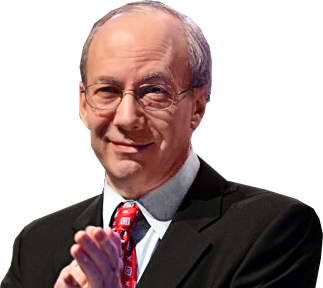

A Review of Michael Meyer’s Biography of Rabbi Alexander M. Schindler
Alexander M. Schindler (1925-2000) was the uncontested leader of Reform Judaism in the latter half of the 20th century, offering a daring and radical vision that changed the course of American Reform. He was also, during that period, American Jewry’s most prominent champion of the Jewish state; and was the last American Jewish leader to galvanize the entire American Jewish community on behalf of Israel.
Rabbi Schindler finally has the biography that he deserves, written by Michael A. Meyer, the expert chronicler of Reform Judaism.
Meyer’s work is masterful, concise, thorough, and fluidly-written; it reminds us precisely how dominant a figure Schindler was, in both the religious and secular realms. No other Jewish leader, secular or religious, approached his influence; as one reporter suggested, with the exception of Elie Wiesel, Schindler in his prime was arguably the best-known Jew in America.
Reform Jews will remember Schindler for many things, but especially for his courageous leadership on his outreach initiatives.
In the late 1970’s, North American Jewry was facing a spiraling intermarriage rate, and was utterly at a loss as to how to respond. Schindler knew that something had to be done that would be religiously authentic, but that would also have a practical impact. And so he stood up before the UAHC (now the URJ) Board in Houston in 1978 and said things that few people were prepared to say above a whisper:
- that we Reform Jews had to be serious about how we convert people to Judaism;
- that we had to stop pretending that we treat converts well when in fact we do not;
- that we had to truly embrace our intermarried children; and
- that we had to draw intermarried couples into the synagogue and encourage them to convert and to raise their children as Jews.
None of these things sound revolutionary now; all were revolutionary then. And Schindler knew that rhetoric was not enough. He knew that we needed outreach committees in every synagogue, high quality conversion materials, and staff to carry out the outreach revolution, and in just a few short years he made it happen. He also urged the CCAR to adopt a resolution on Patrilineal Descent, and it is fair to say that its passage 5 years later was due in very large measure to his influence.
Meyer expertly takes us through the intricate politicking that surrounded the outreach debate. Most of the non-Reform world was furious at Schindler for departing from halakhic norms, while not a few Reform Jews had reservations of their own, fearing that outreach would diminish the incentive to convert to Judaism. Sensitive on this point, Schindler emphasized that Reform rabbis must explicitly ask intermarried Jews to consider conversion.
And what Mayer shows is how skillful Schindler was in gaining acceptance for his outreach program. Many in Reform leadership were sympathetic but uncertain about outreach, and they argued that Schindler needed to move more slowly in bringing around the various factions of the movement to his point of view.
And this raises the question: What if Schindler had not articulated these positions in 1978? Would they have been accepted eventually? Probably yes. The arc of Jewish history pointed in the direction of an inclusive Judaism, and Schindler understood this better than anyone. But without his leadership, acceptance of these positions would have taken another generation, and it would have happened in an uneven, piecemeal way. And it would have happened in a way that divided and undermined our national movement, rather than strengthening and uniting it.
I once asked Alex if, instead of giving the l978 speech, it might have been better if he had sat down with the leadership of the Union, CCAR and the College-Institute, and consulted, working through appropriate committees. He smiled. Schindler knew that if he had gone the way of consultations and committees, his ideas would have died a slow death. We would have studied them, and studied them, and then studied them some more. His only hope was to proclaim what he believed, to give his rationale, and then fight to make it happen. And that’s what he did. In short, Alex Schindler was as far as you could get from a cautious functionary. As Meyer points out repeatedly, Schindler liked to stir things up; he did this because he enjoyed the drama, but also because he believed that this was the best way to get things done. In short, he was a leader, and suspicious of bureaucracies, including his own. And because he was a leader, he changed Reform Judaism and North American Judaism forever.
A second major theme of Meyer’s book is that Alex Schindler was the last of the great national leaders of American Jewry, drawing together a deeply divided Jewish community to stand with Israel. When Menachem Begin won the Israeli election in 1977, many expected the center and left flanks of American Jewry to reject Begin’s leadership. But newly elected as chair of the Conference of Presidents of Major American Jewish Organizations, Schindler firmly believed that Begin was open to peace and that American Jewry owed him the chance to embrace a moderate position. In the tradition of Stephen Wise and Abba Hillel Silver, Schindler threw himself into the task of lining up American Jews behind Begin, and remarkably, he succeeded. As Meyer makes clear, in what was a stunning accomplishment for a somewhat radical, left-leaning, foreign-born Reform rabbi, he was able to win the support of all elements of the community, including some Reform leaders who were appalled by Begin’s record. Schindler accomplished this by correctly gauging Begin’s political temperament – he was in fact more politically moderate than many gave him credit for – and by finding a language of Yiddishkeit and empathy with other Jews that allowed Jews across the political spectrum to identify with him and trust him. Alex Schindler, in short, had a Jewish soul, and he understood other Jewish souls. It was bizarre, in a way. This most passionate of Jewish advocates was the most masterful builder of Jewish consensus of his time.
The Schindler that emerges from this book is a complicated man and a complicated Jew. He preferred to think of himself as a Jew rather than a Reform Jew, and a Jewish leader rather than a Reform leader. At the same time, and without contradiction in his own mind, he was a ferocious advocate for Reform Judaism, with a deep commitment to a prophetic Judaism that he saw as the very core of Jewish tradition. Meyer discusses Schindler’s wide-ranging social justice commitments, including his advocacy for LGBTQ+ causes and commitments to gun-control, the environment, race relations, and anti-apartheid work. His LGBTQ+ work was especially important; he spoke out long before others did so, and with special eloquence, and was viciously criticized by much of the Jewish community, again including many Reform critics, for doing so. But here, as elsewhere, he was fearless; he spoke his mind, convinced that Judaism would not be saved and injustice would not be defeated by small steps.
Finally, a word must be said about what Meyer refers to as Schindler’s natural “ebullience.” Schindler was the pre-eminent leader of American Jewry because of his sharp mind, his diplomatic skills, his soaring oratory, his Hasidic upbringing, and his love for fellow Jews. But no less important was the charisma that radiated from him and drew others to him. This book also tells the story of Alex the man: warm, funny, charming, given to the occasional racy story. We underestimate charisma, sometimes, but it is a mistake. I worked for Alex Schindler for 16 years, and like other staff members, I used to love to be called to his office to discuss one thing or another. As those who remember him know, it was a delight just to be in his presence, to listen to him talk, to hear his insights, to take in his jokes and stories. And yes, it sounds a bit trite, but it is true: you always felt you were in the presence of greatness.
But this great man, who met with Presidents and kings, always remained one of us: a synagogue Jew.
Every week, he and his beloved Rhea would shlep to one synagogue or another—large, small, in between, in every corner of this continent. And he loved doing it and never got tired of it. And if he heard a good sermon, or a moving piece of music, or if he was impressed by a young rabbi or cantor, on Monday morning he would love to come in and tell the staff about what he had heard and seen. And we loved to listen.
In his moving and powerful eulogy at Alex’s funeral, Al Vorspan reminded us that we are, all of us, on Schindler’s list—not the original one, of course, but Alex Schindler’s list. We were all enriched, and strengthened, and forever changed by his presence and his many gifts. And we miss him terribly. A profound thanks is due to Michael Meyer for writing this book. And may Alex Schindler’s memory be for a blessing.
 Rabbi Eric Yoffie is a writer, lecturer, and internationally-known religious leader. A bold, compelling, and inspiring speaker, he has presented at the World Economic Forum in Davos and has appeared on Fox news, CNN, and many other news outlets. He writes regularly for Time, The Huffington Post, The Jerusalem Post and the Israeli daily Haaretz. He speaks on a

I’ll always remember this story Alex told at a UAHC biennial… Once, flying home from a problem-solving visit to a synagogue, he just wanted to sleep though the flight. But his seat mate was a nudge who would not leave him alone and kept asking him questions–about his life, his family, his career. With each question Alex dissimulated and continued to attempt to fall asleep but the man continued. Finally, hoping to pacify him, Alex responded to the prying man’s query about his profession, “I am a charoset maker,” he “confessed.” Instead of the hoped for bewildered silence, the man responded, “Really? So I always wondered, tell me, how do you keep charoset from turning brown?”
good review, but the editor should have caught the “ark” instead of “arc”.
I personally think hewish historians will hold Eric Yoffe in at least as high regard as Alex Schindler.
I enjoyed reading this and will read the book as well. I meet Rabbi Schindler as a teenager when he came to Temple Emanuel as assistant Rabbi. He was quite the contrast with what we learned and experienced as a “traditional Rabbi”. We learned a lot about life and growing up Jewish in the United States, sometimes while playing a game of table tennis with him. I followed his career from afar, and admired his commitment and dedication to moving Reform Judaism into the ever changing social environment.